
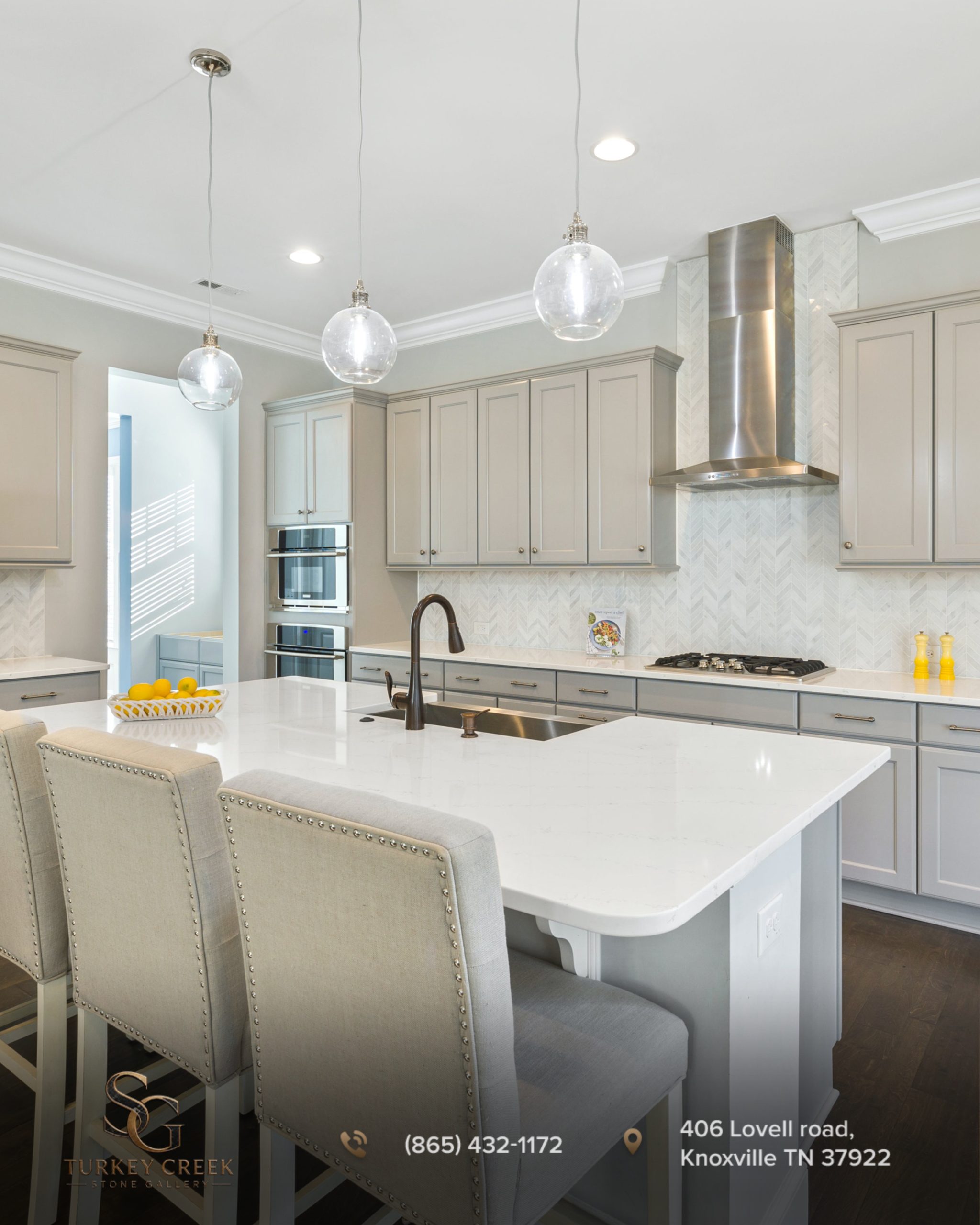
Yes, we can use two different countertop materials in the same kitchen, and the combination can be both practical and visually intentional. We often see homeowners choose one material for the perimeter countertops and another for the island because the two surfaces have different jobs.
For example, quartz kitchen countertops in Dayton, TN can create a consistent, easy-to-maintain surface around the main work areas, while a natural granite island adds variation and a stronger visual focal point. The key is not simply choosing two attractive stones. We need to make sure their colors, patterns, thicknesses, edges, and maintenance requirements work together.
At Turkey Creek Stone Gallery, we help homeowners compare materials based on how the kitchen will actually be used. A family that cooks every day may have different priorities from someone designing a kitchen mainly for entertaining.
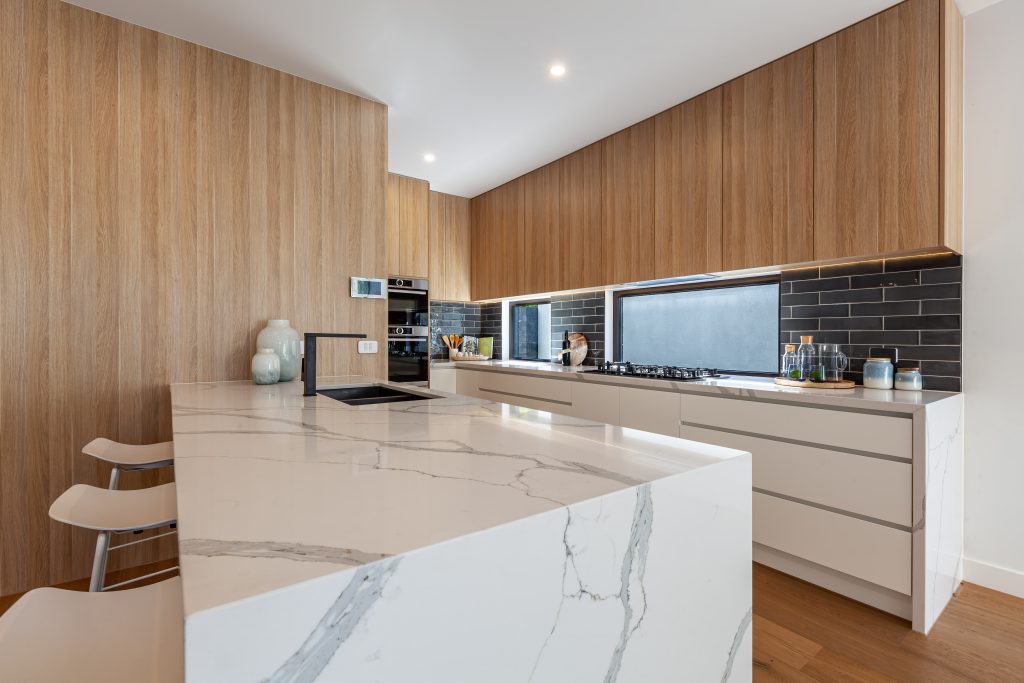
Is it a good idea to use two countertop materials?
Yes, using two materials can be a smart design choice when each material has a clear purpose. The most successful combinations usually separate the island from the perimeter rather than placing different materials randomly throughout the kitchen.
An island is naturally a visual centerpiece, so it can handle a bolder stone or a different color. The perimeter can remain quieter, especially when the cabinets, backsplash, flooring, and appliances already provide several visual elements.
We recommend choosing a relationship between the materials rather than trying to make them identical. They can coordinate through color, veining, undertones, or finish without being the same stone.
Which countertop materials work well together?
Quartz and granite are two practical materials to combine because they offer different appearances while both working well in active kitchens. Quartz can provide a consistent background, while granite introduces natural variation.
Marble can also work as an accent material, particularly on an island or baking area, although it requires more care because it can scratch and etch more easily. For homeowners who want a dramatic island, marble can create contrast without changing the entire kitchen.
| Combination | Typical Design Effect | Main Consideration |
|---|---|---|
| Quartz + Granite | Clean perimeter + natural focal point | Coordinate undertones |
| Quartz + Marble | Consistent base + dramatic island | Marble requires more care |
| Granite + Marble | Rich natural-stone look | Patterns should not compete |
| Quartz + Quartz | Subtle variation | Use different colors or patterns |
| Granite + Granite | Natural, layered look | Keep colors visually related |
At Turkey Creek Stone Gallery, we look at the entire kitchen before recommending a combination. Countertops should relate to the cabinets and backsplash rather than being selected in isolation.
Should the island countertop match the perimeter?
No, the island does not have to match the perimeter countertops exactly. In fact, using a different material can make the island feel more intentional and give the kitchen a custom-designed appearance.
One approach we commonly recommend is keeping the perimeter neutral and using the island to introduce stronger movement. Another is to reverse that idea by using a patterned perimeter with a simple island.
For quartz kitchen countertops in Dayton, TN, a homeowner might select a relatively consistent quartz for the perimeter and then choose a granite island with natural veining. The two surfaces can look connected without appearing repetitive.
How do you make two different countertops look cohesive?
The easiest way is to repeat at least one visual characteristic between the materials. Matching undertones is particularly important because two stones can both look “white” but have completely different warm or cool bases.
Cabinet color is another useful bridge. Warm wood cabinets can connect beige, cream, taupe, and warm gray stones, while cooler painted cabinets can work well with gray, white, and blue-gray surfaces.
We also pay attention to the backsplash. If the countertops are already different, a very busy backsplash can make the kitchen feel visually crowded.
A simple rule is:
- Let one countertop be the primary surface.
- Use the second as an accent.
- Connect them through color or undertone.
- Avoid competing patterns of equal intensity.
- Let the cabinets and backsplash provide visual balance.
Is quartz a good choice for the main countertop?
Yes, quartz is often a practical choice for the main work areas because its engineered construction provides a consistent appearance and makes it easy to coordinate with other materials. It is especially useful when we want the perimeter to remain visually quiet.
Quartz is available in many colors and patterns, including designs inspired by natural marble. That gives us flexibility when pairing it with granite, marble, or another stone on the island.
Our provided material price for quartz is $60 per square foot. The final project cost can be different because fabrication, cutouts, edge profiles, installation, and other project requirements are separate considerations.
Is granite a good choice for the island?
Yes, granite can be an excellent island material when we want natural variation and a strong focal point. Every slab has its own mineral pattern, so granite can add character without requiring a completely different kitchen design.
For example, a mostly white kitchen can use a softer quartz perimeter and a gray or subtly veined granite island. The island becomes visually distinct while still belonging to the same color family.
Our provided granite price is $45 per square foot. We still evaluate the specific slab, layout, fabrication requirements, and installation conditions before determining the complete project cost.
Can marble and quartz work together?
Yes, marble and quartz can work very well together when we use them for different visual roles. Quartz can provide a practical and consistent surface throughout the kitchen, while marble can be reserved for an island, baking station, or another area where its appearance is the priority.
Marble is more susceptible to scratching and etching than quartz, so the decision should reflect how the kitchen will be used. Someone who enjoys the natural patina of marble may be comfortable with that characteristic, while another homeowner may prefer a lower-maintenance surface.
Our provided marble price is $65 per square foot. As with the other materials, fabrication and installation requirements affect the total project price.
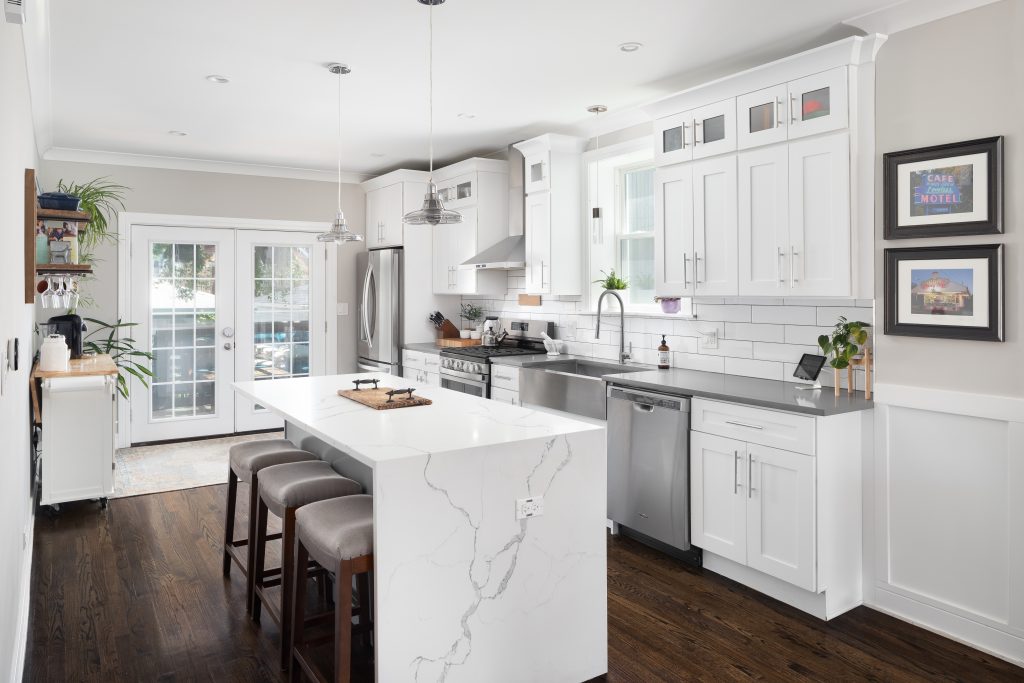
Do two materials need to have the same thickness?
No, two materials do not necessarily have to be the same thickness, but we need to plan the finished elevations carefully. Different slab thicknesses can create a noticeable transition if the cabinetry and edges are not designed around them.
Edge profiles can also influence how the thickness difference appears. A detailed edge treatment can make one surface look visually heavier than another, so we consider the finished profile during fabrication rather than after the materials are selected.
When planning quartz kitchen countertops in Dayton, TN, we also consider appliance clearances, sink installation, cabinet dimensions, and the relationship between the island and surrounding countertops.
Should the backsplash match both countertop materials?
No, the backsplash does not need to match both materials, and keeping it simpler is often the better choice. When two countertop surfaces already create contrast, a restrained backsplash can visually connect the entire kitchen.
For example, if the perimeter quartz has subtle gray movement and the island granite has stronger veining, we might recommend a backsplash that picks up one of the shared neutral tones rather than introducing another pattern.
This approach prevents the kitchen from becoming a collection of unrelated surfaces.
How much does a two-countertop-material kitchen cost?
The material cost depends on the square footage of each surface and the materials selected. Based on the pricing provided for this project, granite is $45 per square foot, quartz is $60, and marble is $65.
| Material | Provided Price | Typical Role in a Two-Material Kitchen |
|---|---|---|
| Granite | $45/sq. ft. | Island or accent |
| Quartz | $60/sq. ft. | Main perimeter |
| Marble | $65/sq. ft. | Island or specialty area |
The final price can also include templating, fabrication, sink and cooktop cutouts, edge finishing, delivery, installation, and removal of an existing countertop when applicable.
At Turkey Creek Stone Gallery, we consider the complete layout rather than calculating the material alone. A two-material design does not automatically cost more than using one material everywhere; the result depends heavily on square footage and fabrication complexity.
Does using two materials make installation take longer?
Not necessarily, but a more complicated layout can require additional planning and fabrication. Once the final measurements are confirmed, many countertop projects can be completed within approximately 7-10 days, depending on material availability and project requirements.
The basic process includes:
- Confirm cabinet readiness and final measurements.
- Select and approve the slabs.
- Create the countertop layout.
- Fabricate the individual pieces and cutouts.
- Finish the edges.
- Deliver and install the countertops.
- Complete seams and final adjustments.
When we install two different materials, accurate templating becomes particularly important because the surfaces need to meet visually and functionally.
What mistakes should you avoid when mixing countertop materials?
The biggest mistake is choosing two materials independently without considering the rest of the kitchen. A countertop can look excellent in a showroom but feel disconnected once it is placed next to specific cabinets, flooring, and backsplash materials.
We also advise against pairing two extremely busy stones unless the kitchen has enough visual space to support them. Strong veining on both the island and perimeter can compete for attention.
For quartz kitchen countertops in Dayton, TN, another common mistake is selecting a quartz design that imitates marble and pairing it with a granite that has completely different movement. The materials do not have to match, but they should have a visual conversation.
Can two different countertop materials make a kitchen look more expensive?
Yes, a carefully planned two-material design can create a more custom appearance because it adds intentional contrast and gives different areas of the kitchen distinct roles. The effect comes from coordination, not simply from using expensive materials.
For example, a restrained quartz perimeter combined with a carefully selected natural-stone island can create a strong focal point. The same principle works with cabinets: simple cabinetry allows the countertop to become more prominent, while detailed cabinetry may call for quieter surfaces.
The goal is balance. We want the kitchen to look designed rather than simply assembled from different materials.
What should you choose for a family kitchen?
For a busy family kitchen, we recommend choosing the material based on how each area is actually used. The main preparation zones should prioritize practical maintenance, while the island can be used to introduce a different texture, color, or natural pattern.
If the island is where the family gathers, eats, works, and entertains, we may choose a durable material with an appearance that makes it the centerpiece. If the island is primarily decorative, the homeowner may be more comfortable prioritizing the look of marble or another distinctive surface.
At Turkey Creek Stone Gallery, we help homeowners compare granite, quartz, marble, and other materials according to both design goals and everyday use.
FAQ: Two Countertop Materials in One Kitchen
Can I use quartz and granite in the same kitchen?
Yes. Quartz and granite can work together particularly well when one is used for the perimeter and the other is used as an island accent.
Does the island countertop have to match?
No. A different island countertop can create contrast and make the kitchen feel more custom.
Is marble practical for a kitchen island?
Yes, but marble requires more care than quartz and can scratch or etch more easily. It works best when the homeowner is comfortable with its natural characteristics.
Do two countertop materials cost more?
Not automatically. The total depends on square footage, material prices, fabrication, cutouts, edges, installation, and layout complexity.
Can different countertop materials have different thicknesses?
Yes, but the finished elevations and edge profiles need to be planned carefully so the transition looks intentional.
How long does countertop installation take?
Many projects can be completed within approximately 7-10 days after templating and fabrication, although the exact schedule depends on the project.
What is the best way to coordinate two countertop colors?
We recommend connecting the materials through a shared undertone, cabinet color, backsplash element, or another repeated visual characteristic.
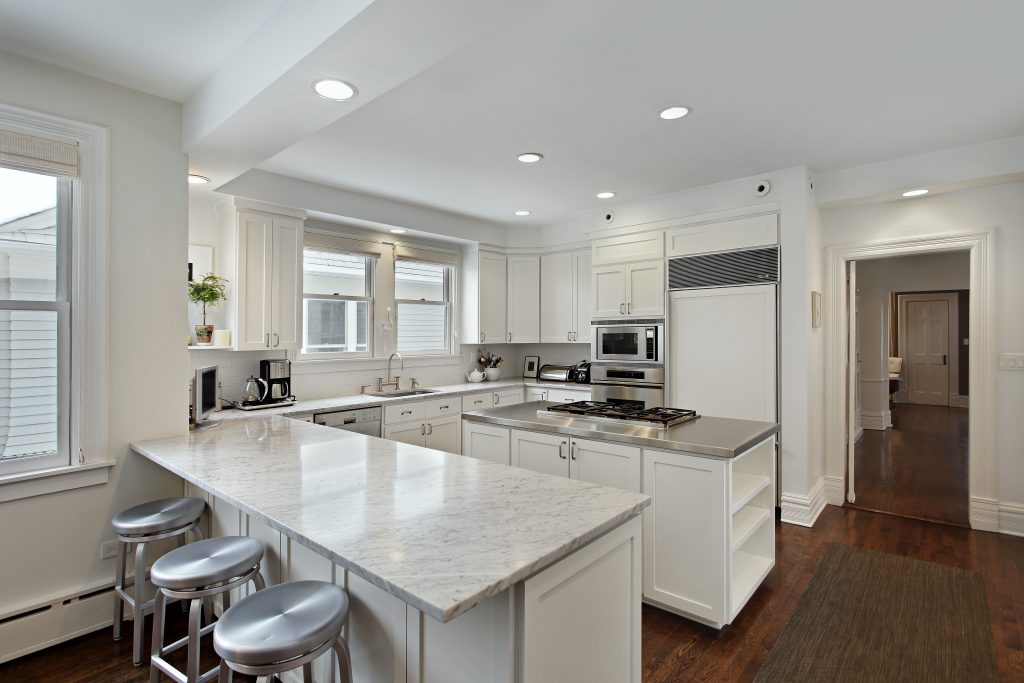
Countertop Services in Knoxville, TN
We serve Knoxville, TN and surrounding areas, including Dayton, TN, with countertop fabrication and installation for residential kitchen projects. Our services include templating, fabrication, sink and cooktop cutouts, edge finishing, delivery, and professional installation for granite, quartz, marble, and other countertop materials.
Whether you want one consistent surface or two materials with a deliberate contrast, we can help you evaluate the layout, materials, and practical requirements before fabrication begins. For homeowners planning quartz kitchen countertops in Dayton, TN, that planning is especially useful when the island will feature a different stone.